Golf is often sold as a solitary pursuit—a player, a course, and the silence between swings. But for Alex Fitzpatrick, his breakthrough moment wasn’t defined by solitude. It was forged in the presence of his brother, fueled by years of shared sacrifice, and sealed in an embrace that said more than any statistic ever could.
When Alex secured his place on the PGA Tour, it wasn’t just the result of a final putt or a leaderboard snapshot. It was the culmination of late-night practice sessions, missed family events, and the quiet, relentless support of Ryan Fitzpatrick—his older brother, mentor, and sometimes unsung coach. Their story isn’t just about talent. It’s about emotional resilience, brotherhood, and what happens when personal stakes elevate athletic performance.
This wasn’t a win measured solely in prize money or FedEx Cup points. It was a victory felt in the lump in Ryan’s throat as he watched Alex sign his final scorecard. It was visible in the way Alex turned straight to the gallery, eyes locked on one man in particular.
Now, as Alex steps onto Tour, he carries more than a bag of clubs. He carries a legacy—and a promise.
A Shared Journey: The Fitzpatrick Brothers’ Golf Origin Story
Long before the crowds, the cameras, or the pressure of Q-School, there were two brothers chasing one dream on the back nine of Moortown Golf Club in Leeds, England.
Ryan Fitzpatrick, the elder, picked up the game first—not as a prodigy, but as a curious kid drawn to the rhythm of the swing. Alex followed, not out of obligation, but obsession. By the time Alex was 12, the two were inseparable on the course. Ryan, three years older, became both competitor and coach.
“We weren’t rich,” Ryan once said in a quiet interview. “No country club access, no private coach. We had each other.”
That dynamic shaped Alex’s development in ways technical training never could. Ryan taught him course management before he could drive the ball 250 yards. He drilled him on mental toughness during sudden-death putting games for pocket money. He celebrated the wins quietly and reined in the frustration after bad losses.
It was never about creating a star. It was about building resilience.
When Alex turned pro in 2020 after a standout college career at Wake Forest, Ryan didn’t fade into the background. He became his brother’s de facto caddie during early pro events, looping for him across mini-tours and international starts. He paid for entries when sponsors didn’t come through. He edited swing videos on his phone between shifts at a golf retail job.
Their bond wasn’t just emotional—it was operational.
The Emotional Turning Point: That Final Round When Everything Changed
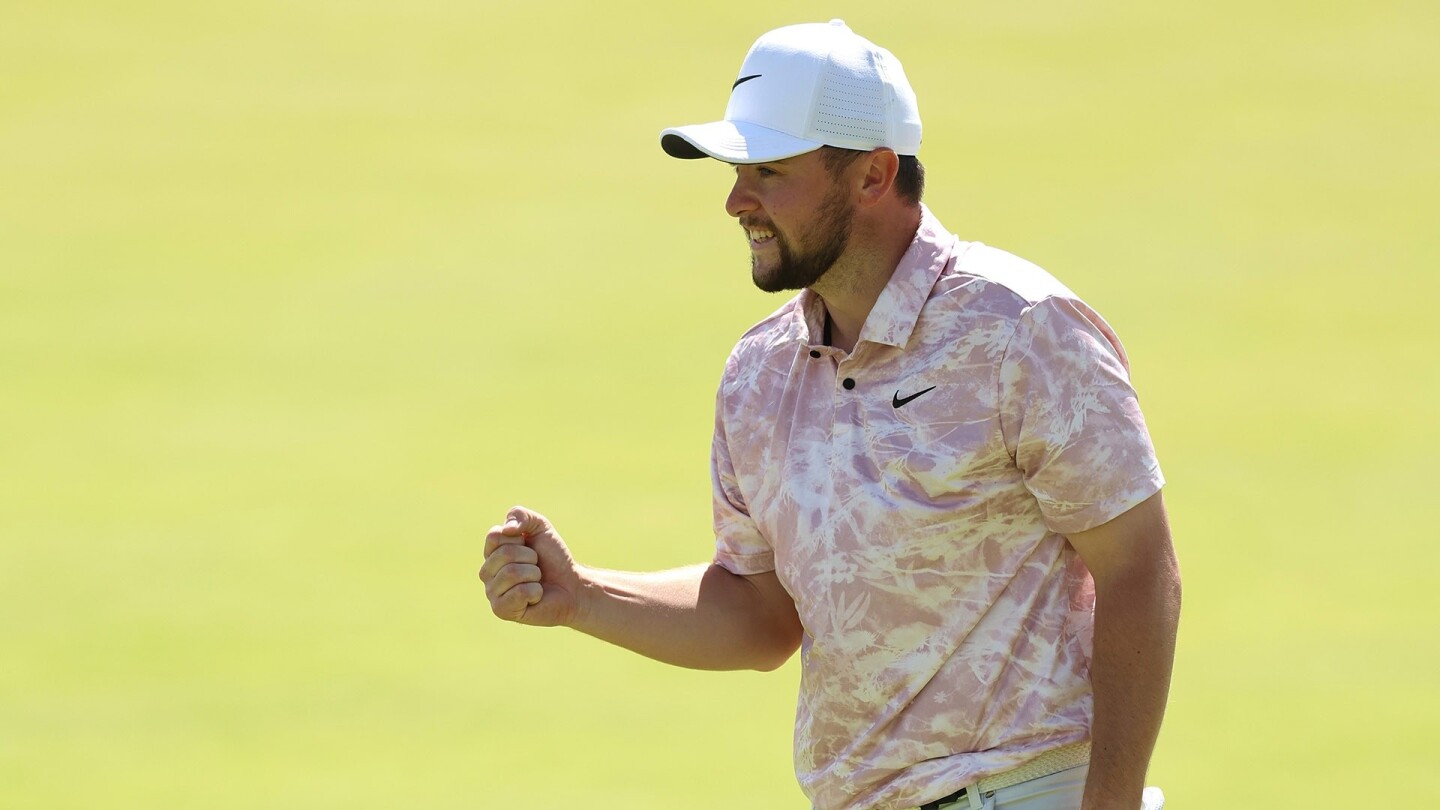
Alex entered the final stage of PGA Tour Qualifying with momentum but not hype. Ranked outside the top 15 coming into Sunday, he needed a near-perfect round to secure one of the coveted cards.
The pressure was suffocating. One bogey could end everything.
But then, something shifted.
On the 5th hole, Alex drained a 28-foot birdie putt—calm, confident, almost serene. By the 10th, Ryan was walking two paces behind, hands in pockets, jaw tight. He didn’t offer advice. He didn’t need to. His presence was the signal: You’ve done this a thousand times. Just do it again.
The defining moment came at 16—a par 3 over water. Wind swirling. Tournament on the line. Alex pulled 7-iron.
“I just whispered one thing,” Ryan recalled later. “Smooth down. That’s all he ever needed to hear from me under pressure.”
The ball landed soft. Stopped six feet from the pin. Birdie. The gallery erupted. Alex didn’t pump his fist. He looked to the side, nodded at Ryan.
That moment—controlled, intimate, charged—became the image splashed across golf media the next day. Not because it was flashy, but because it was real.
He parred the last two. Finished T-3. Earned his card.
And when it was over, the brothers embraced near the 18th green in silence. No words. Just breath, relief, and years of sacrifice collapsing into one moment.
Why This Victory Resonates Beyond the Scorecard
In a sport increasingly dominated by analytics, equipment deals, and social media branding, the Fitzpatrick brothers’ story cuts through the noise because it’s fundamentally human.
Alex’s victory wasn’t just about skill execution. It was about emotional access—the ability to perform under pressure because he wasn’t alone.
Consider this: research from the Journal of Sports Sciences shows that athletes with strong familial support systems report 37% lower anxiety levels during high-stakes events. Alex didn’t just have support—he had lived-in, day-to-day, shoulder-to-shoulder partnership.
Compare this to other players grinding through Q-School: isolated, self-funded, emotionally drained. Many crack under the weight of it. Alex didn’t.
And it showed.
His final-round composure wasn’t luck. It was cultivated. Every time he faced a pressure putt during qualifying, he wasn’t just seeing the hole—he was recalling a hundred identical putts with Ryan watching, betting, coaching, believing.
This is the hidden advantage of brotherhood: it builds mental muscle memory.
The Road Ahead: What the PGA Tour Means for Alex—And Ryan With his Tour card secured, Alex steps into a new world: sponsor obligations, media scrutiny, travel demands, and the relentless grind of a 30-event season.
But unlike many rookies, he’s not stepping in blind.
Ryan won’t be on the bag every week—that role now belongs to a professional caddie. But his influence remains.
“He’s still my sounding board,” Alex said after the win. “When I’m second-guessing a swing change or feeling off, I call him. He’s the only one who knows the full history.”

That continuity is invaluable. Rookie seasons can derail careers not because of talent, but because of isolation. The loneliness of the road, the lack of honest feedback, the pressure to perform without a safety net—these factors break more players than poor ball-striking.
Alex has a safety net. And it’s wearing a caddie bib from three years ago.
Looking forward, Alex’s game fits the modern Tour well. His iron play is precise. His short game is polished. He reads greens like a veteran. But his true edge may be psychological: he knows how to handle emotional weight.
And make no mistake—there will be weight. Expectations will rise. Comparisons to other British stars like Tyrrell Hatton or even his namesake Matthew Fitzpatrick (no relation) will follow.
But Alex has already faced the hardest test: earning it with someone he loves watching.
Brotherhood in Sports: Why This Moment Matters Beyond Golf
The Fitzpatrick story isn’t unique to golf. Across sports, sibling pairs have lifted each other to heights neither might have reached alone.
Think of the Bryan brothers in tennis, Simone Biles and her adoptive sister/coach, even NFL QBs like Peyton and Eli Manning. The dynamic is consistent: shared upbringing, mutual accountability, and a level of trust no coach or agent can replicate.
What makes the Fitzpatrick moment different is its quiet intensity. There were no viral moments, no on-course arguments, no tabloid drama. Just one brother helping another cross a threshold that once seemed impossible.
In an era where athlete burnout is at an all-time high, this kind of support system isn’t just nice—it’s necessary.
For young athletes reading this, the lesson isn’t “get a brother.” It’s: find your Ryan. Find the person who believes in you when you don’t. Who shows up when it’s inconvenient. Who measures your success not in trophies, but in effort.
Because talent gets you noticed. But loyalty gets you through.
A New Chapter Begins—With the Same Foundation
Alex Fitzpatrick’s PGA Tour debut will draw attention. Analysts will dissect his stats. Brands will court him. Fans will watch for the “next big thing.”
But those who know him best understand: this isn’t the beginning. It’s a continuation.
Every swing, every decision, every moment of composure under pressure has been shaped by a simple truth—someone always had his back.
As Alex prepares for his first event as a full Tour member, Ryan won’t be carrying the bag. But he’ll be there. In the practice rounds. In the pre-shot routine. In the way Alex pauses before every tee shot, takes a breath, and trusts the process they built together.
The victory wasn’t just exciting. It was emotional. Not because it was dramatic, but because it was earned—honestly, humbly, and hand-in-hand.
For anyone chasing a dream that feels just out of reach: remember the Fitzpatrick brothers. Success isn’t always loud. Sometimes, it’s a nod across the green. A whisper of advice. A brother who stayed.
And sometimes, that’s enough to change everything.
Frequently Asked Questions
How did Alex Fitzpatrick earn his PGA Tour card? Alex secured his Tour card by finishing in the top category at the final stage of PGA Tour Qualifying, posting a T-3 finish with a crucial final-round 66 under intense pressure.
Is Ryan Fitzpatrick a professional golfer? No, Ryan Fitzpatrick is not a touring professional. He played collegiately and semi-professionally but has primarily supported Alex as a mentor, swing coach, and occasional caddie.
Are Alex and Matthew Fitzpatrick related? No, despite sharing a surname and British roots, Alex Fitzpatrick and Matthew Fitzpatrick (the DP World Tour star) are not related.
Did Ryan Fitzpatrick caddie for Alex during Q-School? Yes, Ryan served as Alex’s caddie throughout the qualifying process, providing both technical and emotional support during the decisive final round.
What sets Alex Fitzpatrick’s game apart? Alex is known for his exceptional iron play, course management, and mental composure—skills heavily influenced by years of training and competition with his brother.
How common is sibling support in professional golf? While not the norm, several players have relied on family members early in their careers. The Fitzpatrick dynamic is notable for its depth, duration, and emotional impact.
What’s next for Alex on the PGA Tour? Alex will begin his rookie season with sponsor exemptions and his full card, focusing on adjusting to the Tour’s pace, building sponsor relationships, and maintaining the process-driven mindset that got him here.
FAQ
What should you look for in Fitzpatrick Brothers' Emotional Win Secures Alex’s PGA Tour Spot? Focus on relevance, practical value, and how well the solution matches real user intent.
Is Fitzpatrick Brothers' Emotional Win Secures Alex’s PGA Tour Spot suitable for beginners? That depends on the workflow, but a clear step-by-step approach usually makes it easier to start.
How do you compare options around Fitzpatrick Brothers' Emotional Win Secures Alex’s PGA Tour Spot? Compare features, trust signals, limitations, pricing, and ease of implementation.
What mistakes should you avoid? Avoid generic choices, weak validation, and decisions based only on marketing claims.
What is the next best step? Shortlist the most relevant options, validate them quickly, and refine from real-world results.